
 English
 Español
 Deutsch
 عربى


Best Cordless Electric Tea Kettle: How to Judge Safety, Heat and Taste
A cordless electric tea kettle is cordless in one specific sense: the body lifts off a power base, so you can pour into a mug, a teapot or a travel cup without a cable dragging across the counter. That single design decision separates a cordless kettle from a corded one, and it is also where most of the practical differences between models start.
If you are comparing options, judge them in this order: base contact and stability, body material, temperature control, then safety certification. Capacity and wattage matter, but they are printed on the box and rarely the reason a kettle disappoints six months later.
Content
What Cordless Really Means on a Tea Kettle
On a cordless kettle, the base stays plugged in and the body carries only a flat contact ring. Power passes through spring loaded pins in the base when the body is seated. A 360 degree connector lets you set the kettle down at any angle, which sounds like a small detail until you are pouring one handed with a full kettle.
The base needs weight to stay put. A 1.7L body holds about 1.7 kg of water once filled, since water density is roughly 1 kg per litre at room temperature (source: standard physical constants for water). A base that weighs under 300 g can slide across a wet counter when you set the kettle down. The contact assembly also wears over time. If the pins lose tension, the kettle starts cutting out mid boil or takes longer than its rated time. A visible, serviceable contact ring is worth more than a decorative base.
Body Material Decides Taste, Weight and Cleaning
Material is the second filter. Three are common in cordless tea kettles: high borosilicate glass, food grade PP, and food grade 304 stainless steel. Each changes how the kettle feels, how it cleans, and how quickly it loses heat after boiling.
| Material | Heat shock resistance | Weight and handling | Cleaning | Best suited to |
|---|---|---|---|---|
| High borosilicate glass | Low expansion, roughly one third that of ordinary soda lime glass (source: published glass material data) | Moderate, heavier than PP | Scale stays visible, easy to descale | Tea drinkers who want to watch the water |
| Food grade PP | Does not shatter under normal use | Lightest option | Wipe clean, scale hidden | Offices, travel and small kitchens |
| Food grade 304 stainless steel | High, with good impact resistance | Durable, outer wall may run hot | Needs descaling in hard water areas | Fast boiling and frequent handling |
| Glass with stainless steel wrap | High, protected by the outer shell | Heavier, keeps heat longer | Glass inner wall stays visible | Households that want both |
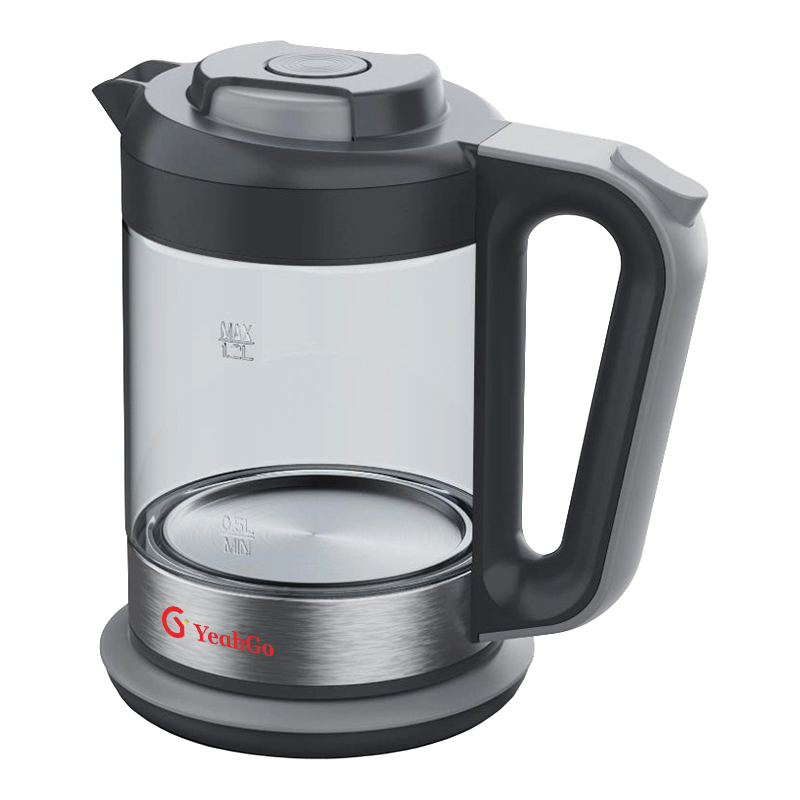
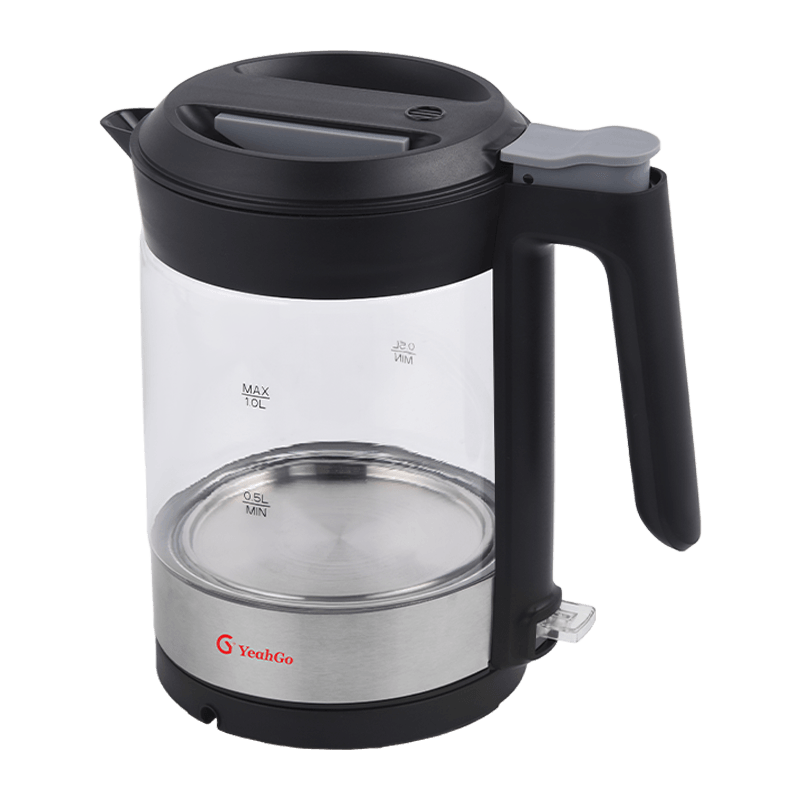
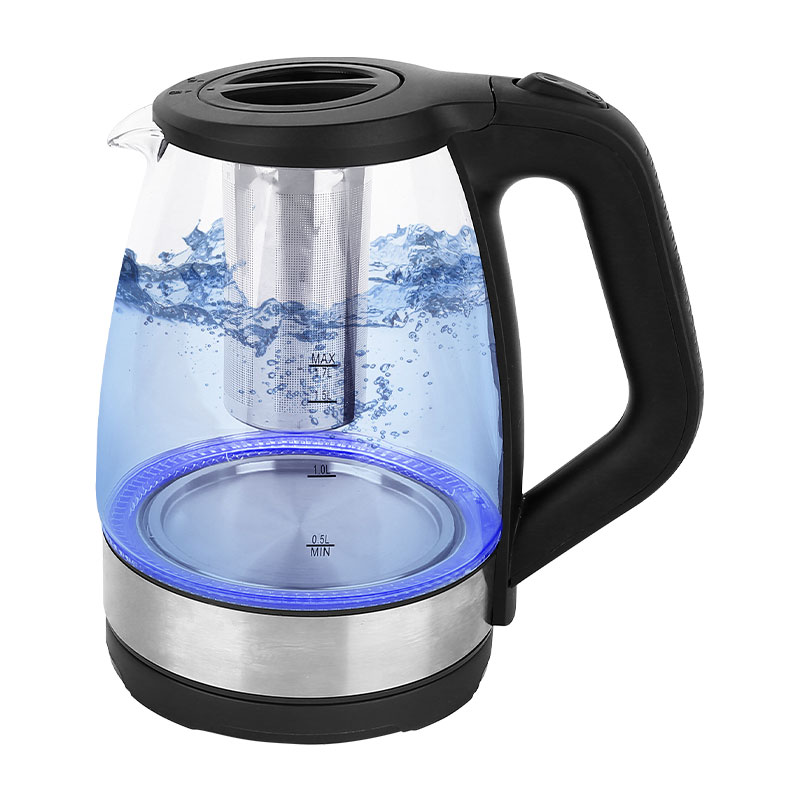 YG-305C Glass Electric Tea Kettle with Stainless Steel StrainerA 1.7L high-borosilicate glass kettle with detachable 304 stainless steel strainer, combining boiling and tea brewing in one vessel.View Product →
Glass shows you the water and any scale, which makes cleaning easier to judge. Stainless steel boils quickly and survives knocks. PP is the lightest and the least likely to break, though it hides the water level unless there is a window. If tea flavour is the priority, glass and stainless steel are the safer choices, because neither holds onto odours the way some plastics can.
Temperature Control Matters More Than Boiling Speed
Most cordless kettles boil water in four to five minutes, so speed is rarely the deciding factor. Temperature accuracy is. Green tea is typically brewed at 70 to 80 degrees Celsius, oolong at 85 to 90 degrees, and black tea close to 100 degrees (source: brewing ranges printed on tea packaging from major tea producing regions). A kettle with only one setting forces you to guess, or to boil and then wait.
Two designs solve this. A variable temperature kettle lets you set a target and stops there. A constant temperature kettle brings water to a set point and holds it, which suits anyone who refills a cup through the morning. If you drink mainly black tea or use the kettle for instant drinks, a simple boil dry switch is enough.
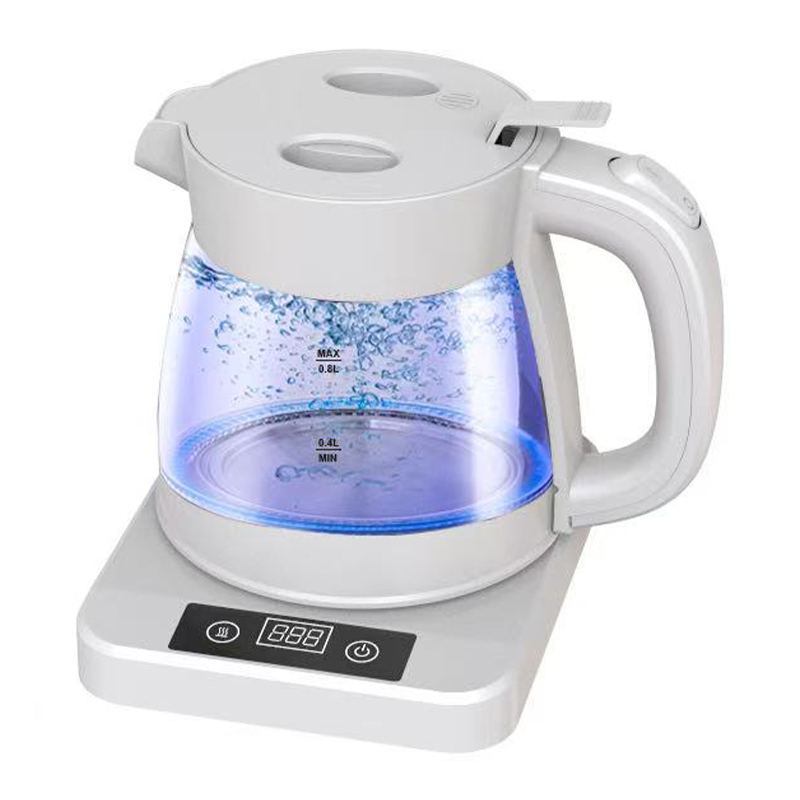 YG-799T Anti-Tip Glass Kettle with Temperature Display and Constant WarmingA 0.8L borosilicate glass kettle with temperature display, anti-tip lid, and constant-temperature base, adding boil-dry, overheat, and anti-tipping protections.View Product →
Safety Features Worth Checking Before You Buy
Every cordless kettle sold in Europe, North America or Japan has to meet local electrical safety rules. The differences show up in how many protections are built in.
- Automatic shut off when the water boils, or when the body is lifted off the base.
- Boil dry protection that cuts power if the element runs without water.
- Anti tip and anti spill structure, useful in households with children or pets.
- A handle that stays cool, usually achieved with a separate handle moulding rather than a single wall.
Certification is the paper trail behind those features. In Europe, GS and CE marking cover the low voltage and mechanical requirements for kettles and similar small appliances. North America uses ETL or equivalent listings, and RoHS restricts certain substances in the electrical parts. Japan uses PSE, while CB certificates are used for international exchange of test results. YeahGo holds GS, CE, BSCI, ETL, RoHS, PSE and CB certificates across its kettle range (source: YeahGo company documentation).
Capacity and Wattage: Matching the Kettle to Your Counter
Heating one litre of water from 20 degrees Celsius to 100 degrees Celsius takes about 335 kJ, based on the specific heat capacity of water at 4.186 J per gram per degree (source: standard thermodynamic data for water). At 1500 W that is roughly 223 seconds of ideal heating, or about four to five minutes in practice once heat loss is counted.
- 0.6L to 1.0L: one or two people, small kitchens, office desks.
- 1.7L: three to four cups in a single boil, the most common household size.
- 120 V markets: kettles usually draw 1000 to 1500 W.
- 220 to 240 V markets: 1500 to 2200 W is typical, so the same capacity boils faster (source: common nameplate ratings on household appliances).
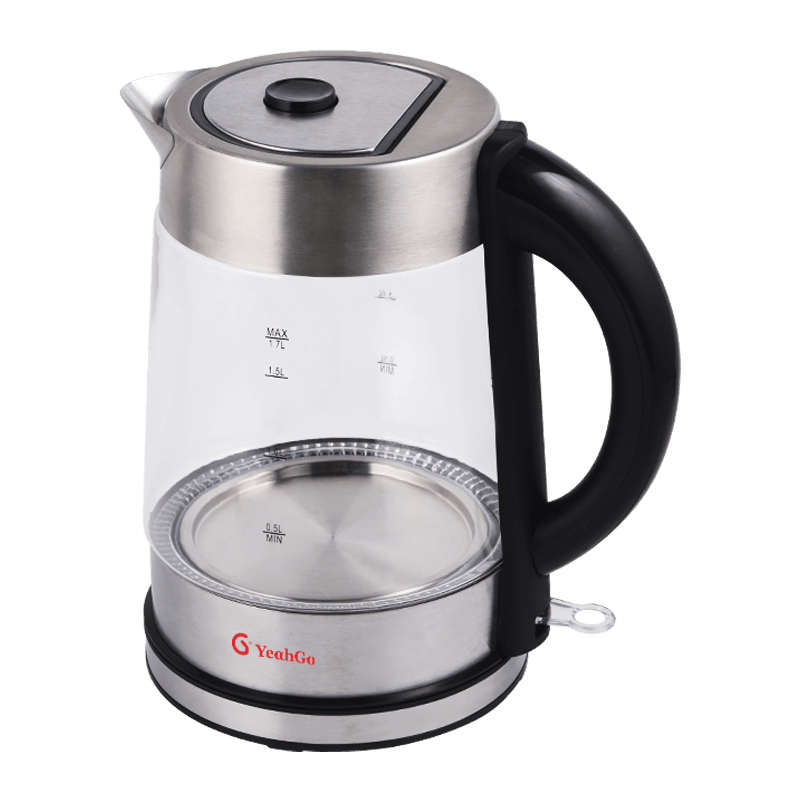 YG-307 1.7L Glass Kettle with One-Touch Pop-Up LidA 1.7L borosilicate glass kettle with one-hand pop-up lid, 304 stainless steel heating plate, and boil-dry and overheat protection.View Product →
How to Judge Build Quality from a Spec Sheet
Spec sheets rarely mention the parts that fail first. Ask about them anyway, or check them on a display unit.
Lid and handle design
A one touch pop up lid is convenient when the kettle is full, but the spring and hinge take the load every time it opens. A manual pull lid has fewer moving parts. Whichever style you choose, check that the lid seats flush, because a lid sitting a millimetre high lets steam escape and slows the boil.
Contact ring and base mass
The contact ring should be clean, flat and slightly raised so water on the base does not bridge the pins. The base should not tip when the empty body is placed near the edge. Both details are cheap to get right and expensive to fix later.
For buyers sourcing in volume, the same logic applies at factory level. A supplier that holds GS, CE, ETL, RoHS, PSE and CB certificates can usually place a kettle in Europe, North America and Japan without redesigning the electrical section. YeahGo, a Ningbo based appliance manufacturer, lists more than 1.2 million units of annual export volume and a plant of 6000 square metres with 120 staff, about 35 km from Ningbo Beilun Port (source: YeahGo company documentation). If you are specifying a private label kettle, you can contact our team with your target market and voltage.
A cordless electric tea kettle is a simple appliance, but the details that decide whether you still like it after a year are the contact ring, the body material, the temperature accuracy and the safety certification behind it. Choose the material for how you drink tea, the capacity for how many cups you pour at once, and the certification for the market you live in.
If you are weighing a glass model against a stainless steel one, start with taste and cleaning rather than appearance. If you are buying for an office or a rental property, weight the base and the boil dry protection more heavily, because those are the parts that survive daily handling. For a wider view of how these appliances fit into daily routines, our guide to the common uses of an electric kettle covers drinks, cooking and cleaning tasks.
News
Products
Related Products
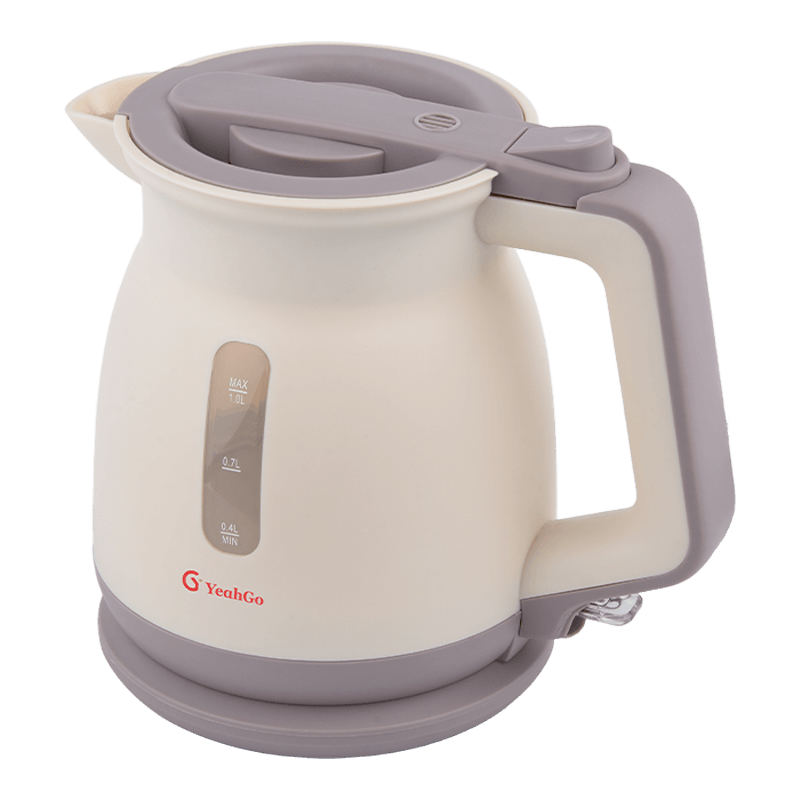
Integrated R&D, production and export full industrial chain.
Quick Link
Product
Contact Information
-
Tel:86-139 5829 1543
-
E-mail:ken@nbyeyang.net
-
Address: No. 299, Xinzhuang West District, Longquan Village, Henghe Town, Cixi City, Zhejiang Province, China
Copyright © Ningbo Yeyang Electric Appliance Co., Ltd. All Rights Reserved OEM/ODM Small Household Appliances Manufacturer Small Home Appliances Factory
