
 English
 Español
 Deutsch
 عربى


Best Electric Tea Kettle Temperature Control: What Buyers Should Compare
Set a kettle to 212 F, pour it over a green tea leaf, and the cup turns bitter in seconds. Drop the same kettle to 175 F and the same leaf gives a sweet, vegetal cup. That 37 F gap is the entire reason variable temperature control exists, and it is the one feature worth paying for.
The best electric tea kettle with temperature control is not the one with the most buttons. It is the one that reaches a target within a few degrees, holds that temperature long enough for a second and third brew, and keeps hot water in contact with food-safe materials only. Preset count, display style, and handle shape sit far behind those three points.
Content
- 1 What Temperature Control Actually Changes in the Cup
- 2 Presets, Increments, and the Accuracy Number Buyers Never See
- 3 Materials and Safety: Glass, Food-Grade PP, and 304 Stainless
- 4 Capacity and Pour Control
- 5 Beyond Tea: Where a Variable Kettle Earns Its Price
- 6 What to Check Before You Buy or Place a Purchase Order
- 7 Where These Kettles Are Built
What Temperature Control Actually Changes in the Cup
Tea is a leaf extract, and extraction speed roughly doubles for every 18 F (10 C) rise in water temperature, a rule of thumb used across food science. That is why brewing recommendations vary so widely by leaf type, and why a kettle locked at boiling cannot serve a full shelf of tea.
| Beverage | Target water temperature | Why it matters |
|---|---|---|
| White tea | 175-185 F (79-85 C) | Delicate buds turn flat and bitter above 190 F |
| Green tea | 160-180 F (71-82 C) | Above 185 F, extracted tannins dominate the cup |
| Oolong | 185-205 F (85-96 C) | Needs heat to open rolled or balled leaves |
| Black tea | 200-212 F (93-100 C) | Tolerates a full boil without turning harsh |
| Herbal and rooibos | 208-212 F (98-100 C) | No true tea leaf, so near boiling is required |
| Pour-over coffee | 195-205 F (90-96 C) | Outside this window, extraction turns sour or bitter |
Note the spread. From a delicate white tea to a rolled oolong is roughly 45 F. A kettle that only offers 40, 60, 80, and 100 C buttons forces a compromise on every cup. A model that adjusts in 1 F or 5 F steps lets the leaf decide.
Presets, Increments, and the Accuracy Number Buyers Never See
Manufacturers describe temperature control in three different ways, and the difference is not cosmetic.
- Fixed presets. Four to six stored temperatures, usually tuned to common tea and coffee styles. Fast to use, but every tea that falls between two presets gets an approximation.
- Variable adjustment. A dial or up and down keys that move in 1 F to 5 F steps across a range of roughly 104 to 212 F. Slower to set, far more precise.
- Keep-warm or hold. The kettle cycles heat back on as the water cools. Thirty minutes covers one pot; sixty minutes covers a morning of refills.
Accuracy is the specification that almost never appears on a retail box. Published kettle testing has recorded real-world deviations of roughly 2 to 5 F between the selected temperature and the water actually in the pot, and the gap widens when the sensor sits in the base instead of the body or the lid. A unit with a stated tolerance of plus or minus 2 F is a better purchase than one advertising fifteen presets and no tolerance at all.
Two practical checks follow from that. First, ask whether the hold function reheats or simply stops heating; only the first keeps a second steep at the right temperature. Second, check whether the display shows the set point or the measured water temperature. A readout tied to the sensor is the one you can trust when numbers drift.
Materials and Safety: Glass, Food-Grade PP, and 304 Stainless
Water can sit at temperature for an hour, so contact materials matter as much as the electronics. Three material families cover most of the category.
- Borosilicate glass. Chemically inert, does not hold flavors from one brew to the next, and shows the water level at a glance. Best paired with a stainless steel or PP base and a silicone gasket.
- Food-grade PP. Light, low cost, and cool to the touch, which makes it a practical choice for 1.0 L anti-tip models where a plastic body reduces weight and breakage risk.
- Food-grade 304 stainless steel. Fast heating and durable, though uncoated interiors can pick up a metallic note in very soft water.
Safety features worth confirming before purchase: automatic shutoff at the set point, boil-dry protection, a cool-touch handle, and an anti-tip base. Anti-tip geometry earns its cost in homes with children and in hospitality settings where a kettle gets nudged on a crowded counter.
For importers, certification decides which markets a kettle can enter at all. GS and CE cover Europe, ETL covers North America, PSE covers Japan, while CB and RoHS are widely accepted baselines. Voltage differs by region: 120 V at 60 Hz for the United States, 220 to 240 V at 50 Hz for Europe, and 100 V for Japan. IEC 60335-2-15 is the international safety standard for appliances that heat liquids, and it is the reference most test houses work from.
A glass body with an on-lid temperature display, for example, lets a tea drinker watch the number fall between steeps instead of guessing at the second pour.
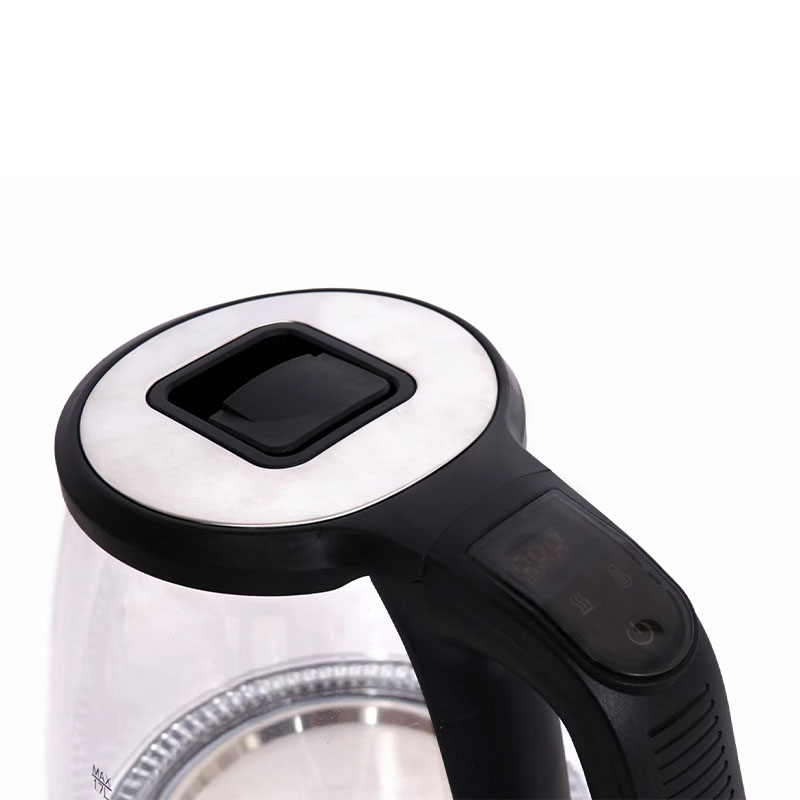 YG-305T 1.7L Digital Temperature Control Glass KettleA 1.7L borosilicate glass kettle with on-handle display and 40–100°C settings, suited to tea sessions and households also boiling water.View Product →
Capacity and Pour Control
Capacity should follow brewing volume, not kitchen size. A 250 ml cup brewed at roughly 8 g of leaf per liter, with a rinse and a second steep, uses about 1 L of water across a session. That puts 1.0 L kettles in the sweet spot for tea drinkers, while 1.7 L models suit households that also boil water for coffee, cooking, or a shared pot.
Spout design changes the pour more than wattage does. A standard spout delivers a fast, wide stream and fills a mug or teapot quickly. A long, narrow gooseneck gives a slow, controlled stream that keeps a coffee bed level instead of digging a crater in it. A one-touch or spring-loaded lid, a 360 degree cordless base, and a visible water window are small conveniences that show up every single day.
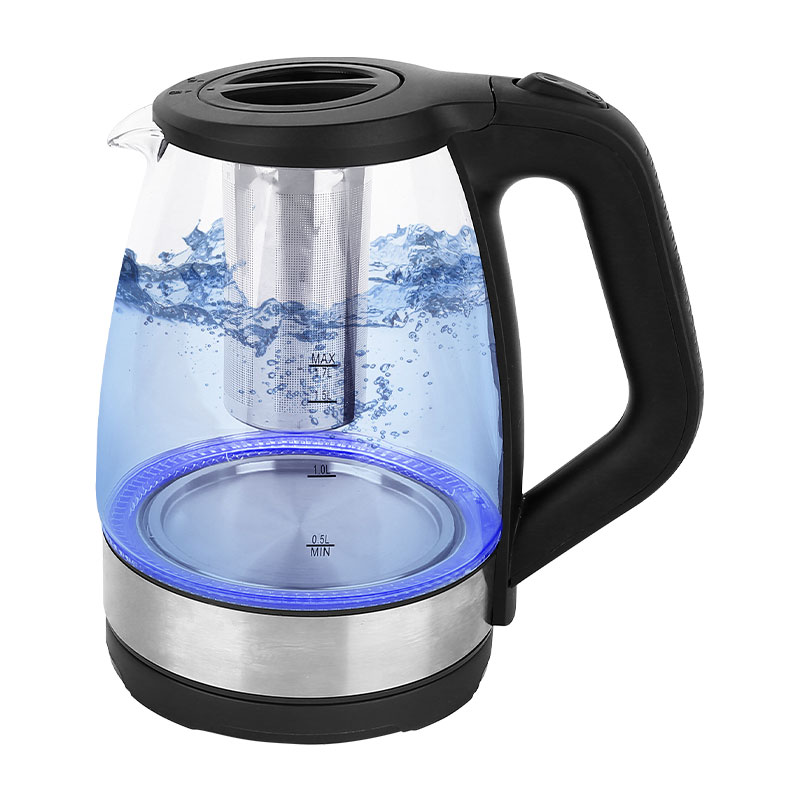 YG-305C 1.7L Glass Kettle with Detachable Tea StrainerA 1.7L high-borosilicate glass kettle with detachable 304 stainless steel tea strainer, simplifying loose-leaf or flower tea brewing.View Product →
Beyond Tea: Where a Variable Kettle Earns Its Price
Tea is not the only reason to buy temperature control. Pour-over coffee sits at 195 to 205 F under Specialty Coffee Association brewing standards, and both green tea and white tea sit well below boiling. Powdered infant formula is the more serious case: World Health Organization guidance published in 2007 recommends reconstituting formula with water at 70 C (158 F) or above to reduce the risk of bacterial contamination, which is a temperature a boil-and-wait kettle cannot confirm.
The same control logic carries into adjacent products. A 250 ml electric wine warmer uses a similar sensor and hold circuit to keep a red at serving temperature, which is why manufacturers that build kettles often build warmers on the same platform. For a wider look at daily use, our notes on what an electric kettle is used for cover the practical side.
What to Check Before You Buy or Place a Purchase Order
The same checklist works for a single retail purchase and for a container order; only the weight given to each line changes.
| Specification | What good looks like | Why it matters |
|---|---|---|
| Temperature range | 104-212 F (40-100 C) | Covers green tea through a full rolling boil |
| Adjustment step | 1 F to 5 F increments | Fixed presets skip the ranges many teas need |
| Stated accuracy | Plus or minus 2 F to 5 F | Independent testing shows real deviation from the set point |
| Hold time | 30 to 60 minutes with reheat | Second and third steeps without reboiling |
| Contact material | Borosilicate glass, food-grade PP, 304 stainless | Hot water sits against these surfaces for long periods |
| Safety features | Auto shutoff, boil-dry cutout, cool-touch handle, anti-tip base | Daily household and hospitality use |
| Certification | GS, CE, ETL, PSE, CB, RoHS | Determines market access for importers |
| Voltage variant | 120 V, 220-240 V, or 100 V | Regional compliance and plug type |
For a purchase order, add one line to the checklist: request the accuracy and hold-time figures in writing, with the test method named. A supplier who can quote a tolerance and a hold window is working from a test report rather than a catalog photo.
Where These Kettles Are Built
YeahGo, the brand of Ningbo Yeyang Electric, manufactures kettles in Ningbo, Zhejiang, about 35 km from the Beilun port. The plant covers 6,000 square meters, employs more than 120 people, and runs an annual capacity above 1.2 million units, exporting to Europe, North America, Japan, and the Middle East. The range covers anti-tip kettles, glass kettles, plastic kettles, stainless steel kettles, wine warmers, and steam cleaners, with certifications including GS, CE, BSCI, ETL, RoHS, PSE, and CB. For a buyer, that breadth means one supplier can handle voltage variants, plug types, and retail packaging for several markets at the same time.
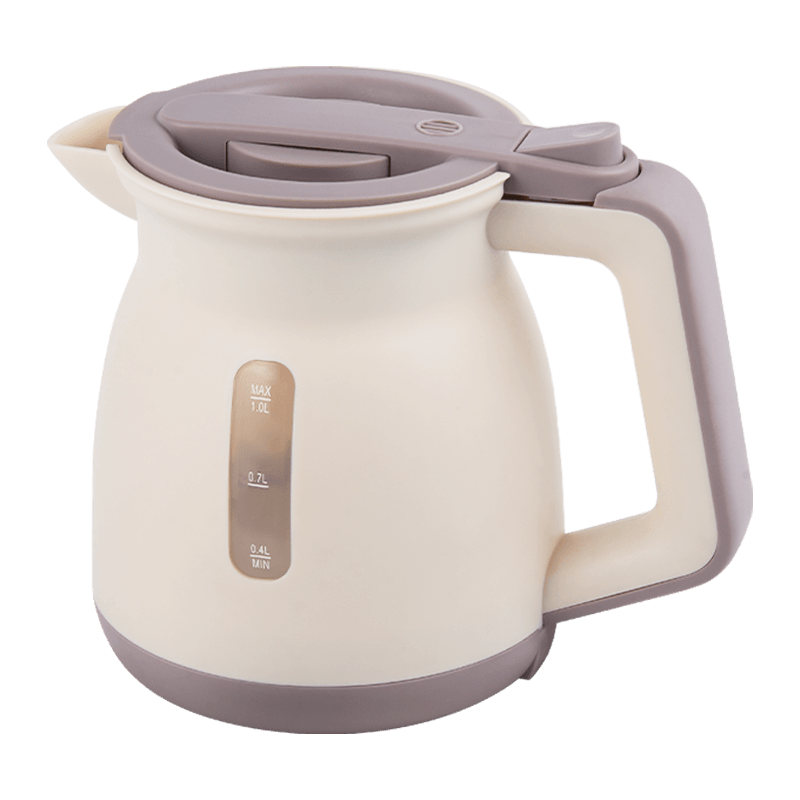
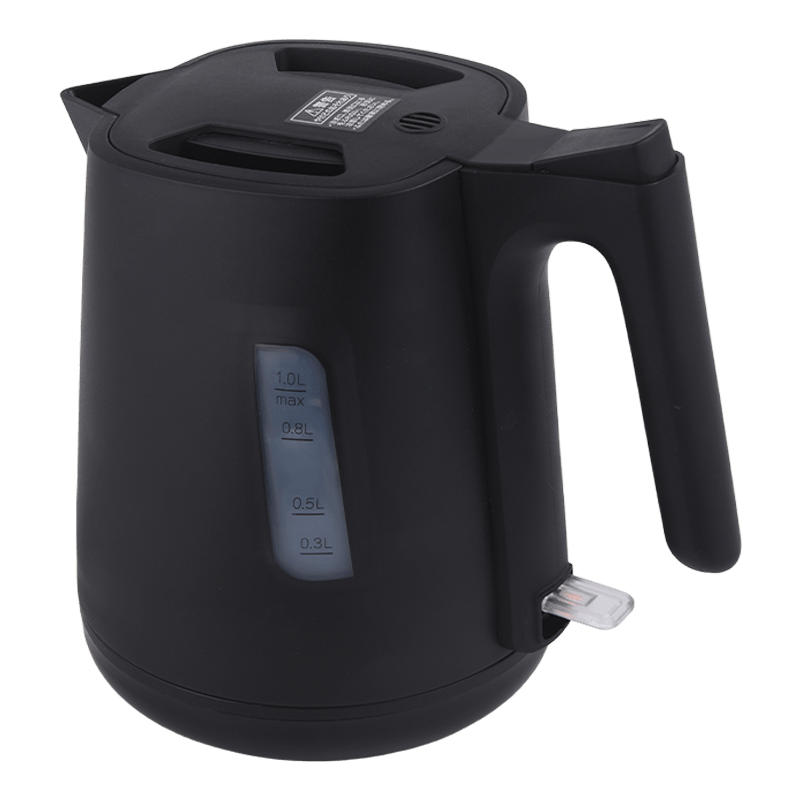
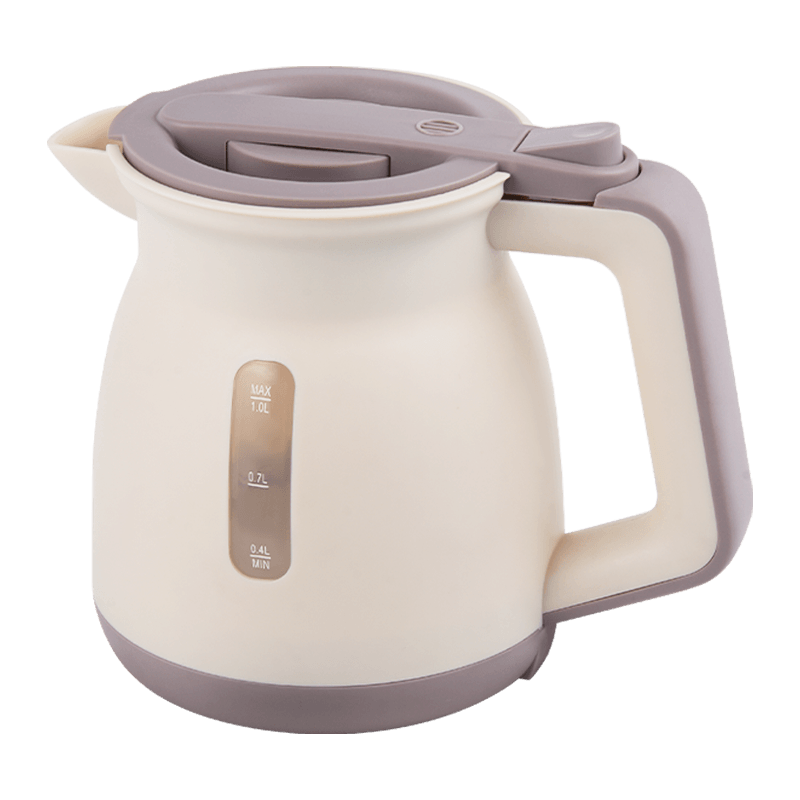 YG-668T 0.8L Anti-Tip PP Kettle with Smart Warming BaseA compact 0.8L food-grade PP kettle with anti-tip lid and separate digital warming base, suited to hotel rooms and small-space daily use.View Product →
Buyers who need samples, custom colors, or a different capacity can request a specification sheet through the contact page and ask for the accuracy, hold time, and certification list in writing before committing to a mold or a container.
Choose the range first, then the tolerance. A kettle that adjusts from roughly 104 to 212 F in small steps, holds within a few degrees for at least 30 minutes, and keeps water against borosilicate glass, food-grade PP, or 304 stainless will outbrew any model picked for its preset count. Everything after that is preference.
News
Products
Related Products
Integrated R&D, production and export full industrial chain.
Quick Link
Product
Contact Information
-
Tel:86-139 5829 1543
-
E-mail:ken@nbyeyang.net
-
Address: No. 299, Xinzhuang West District, Longquan Village, Henghe Town, Cixi City, Zhejiang Province, China
Copyright © Ningbo Yeyang Electric Appliance Co., Ltd. All Rights Reserved OEM/ODM Small Household Appliances Manufacturer Small Home Appliances Factory
