
 English
 Español
 Deutsch
 عربى


Anti-Tip Kettle Manufacturer
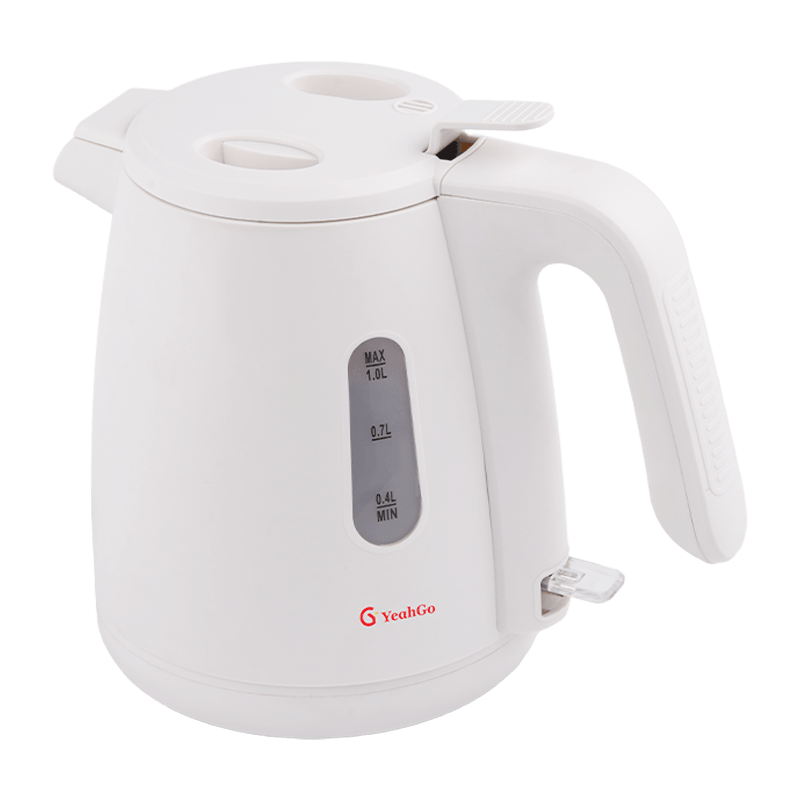
The anti-tip electric kettle is an upgraded safety model. Based on a regular electric kettle, its structural design has been optimized, featuring an anti-tip lid, sturdy clasps, and a non-slip supporting structure. The kettle stands firmly and is not easy to tip over or slide. Its special design effectively prevents hot water spills and scalding accidents caused by bumps and collisions. It also comes standard with multiple safety mechanisms, including dry-boil protection and high-temperature fuse protection. It is specially designed for the elderly, children, families with infants, as well as for offices, schools, nursing homes, and other crowded places with high safety requirements. Structurally, it eliminates drinking water safety hazards, and its safety level far exceeds that of ordinary kettles.
Product Catalogue
development: 2018- Future
Simple Elegant Design, Trustworthy Quality Appliances.
-
0㎡
Factory Area
-
0+
Number of Employees
-
0+
Industry Experience
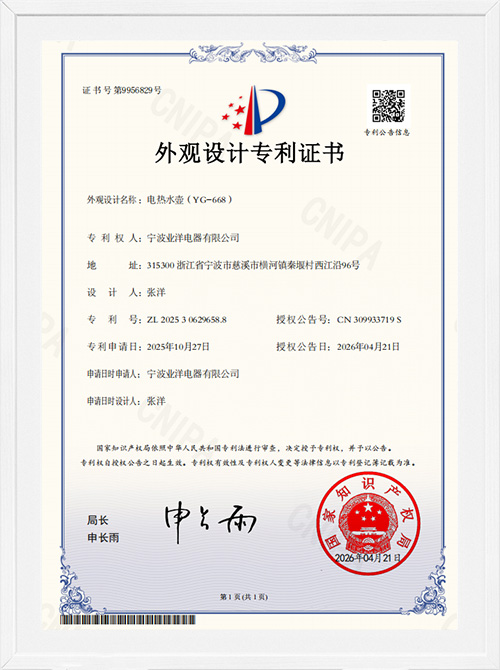
Ningbo Yeyang Electric Appliance Co., Ltd. (YeahGo), founded in 2018 and located in Ningbo City, Zhejiang Province, is a professional electric appliance manufacturer integrating R&D, production, and export. The company places great emphasis on craftsmanship and quality, with product designs that are simple yet elegant. Its main markets include Europe, North America, Japan, and the Middle East. The company holds multiple patents and has obtained international certifications such as GS, CE, BSCI, ETL, RoHS, PSE, CB, and ISO. Guided by the corporate spirit of "professionalism, sincerity, hard work, and gratitude," YeahGo is a China Anti-Tip Kettle Manufacturer and Custom Japanese Anti-Tipping Electric Kettle Factory, committed to building an enterprise trusted by customers and beloved by employees, and has established a solid reputation within the industry.
 Oct 29, 2026

Anti-Tip Kettle Industry knowledge
What B2B Buyers Should Know Before Sourcing an Anti-Tip Kettle
A good Anti-Tip Kettle for wholesale or private-label programs comes down to four things: a stable base design, a lid and spout that limit spills if the kettle is knocked over, reliable electrical safety controls, and a supplier who understands the compliance rules of your target market. Accidental tipping is one of the most common household and hospitality kettle incidents, so products that address it directly tend to stand out on the shelf and in safety-minded purchasing programs such as childcare, elder care, dormitories, and hotels.
This is why many importers, brand owners, and distributors choose to work with a Chinese Anti-Tip Kettle Manufacturer that controls structural design, sealing parts, heating assembly, and final testing in one workflow. In the sections below, we cover what buyers rank as most important, how an anti-tip design compares with a standard kettle, how tilt angle relates to leakage, and what a solid quality control process looks like. The goal is practical: help you shortlist the right product type and ask the right questions before requesting a sample.
The Sourcing Criteria Buyers Rank Highest for Anti-Tip Kettles
When procurement teams compare suppliers, a familiar set of criteria keeps coming up. The horizontal bar chart below shows an indicative importance index, scaled from 0 to 100, based on priorities commonly raised during supplier evaluations for anti-tip kettles. Tip-over and leakage control sits at the top because it is the defining feature of the category. Safety certifications follow closely, since they determine market access and show that the electrical design has been independently reviewed. Boil-dry protection and food-contact material compliance come next, as these address the other everyday risks of a kettle. Base stability and delivery consistency complete the list, and the latter often decides which supplier wins a long-term contract once technical requirements are met. Treat the chart as a planning aid rather than a fixed ranking, because each sales channel weighs these items a little differently.
The practical lesson is that the top items are technical and testable, while the bottom ones are about how well a supplier works with you. A good Chinese Anti-Tip Kettle Factory will show test reports for the first group and a clear process for the second, including sample approval steps, production scheduling, and packaging proofing.
How Tilt Angle Relates to Spill Volume
The core idea behind an anti-tip design is simple: reduce how much water escapes when the kettle is knocked over or tilted. The line chart below shows an illustrative comparison of spill volume against tilt angle for a standard kettle and a kettle with an anti-tip structure, based on a typical full-fill condition. In the standard model, water begins to escape at a modest tilt and the amount rises steadily as the angle increases. In the anti-tip model, a locking lid, a sealed spout channel, and a wider or weighted base delay the point where water escapes and reduce the volume at larger angles. Real results depend on fill level, lid fit, spout shape, and the surface the kettle sits on, so the curves are best read as a design concept rather than a performance promise. Even so, the pattern explains why buyers in safety-conscious channels ask for this feature.
For B2B customers, the point of the chart is that anti-tip performance is a design feature that can be tested and documented. Ask any supplier how tilt and tip-over tests are performed, at what fill levels, and how results are recorded, so the feature in your catalog matches what you can actually show to your own customers.
Japanese-Style Anti-Tip and Anti-Leakage Designs
Japanese households and hospitality buyers have long favored kettles that stay calm when something goes wrong, which is why many buyers specifically search for a Japanese anti-tipping electric kettle or a Japanese anti-side leakage electric kettle. The radar chart below compares this style with a standard kettle across five dimensions: tip-over protection, side-leakage resistance, base stability, ease of use, and design simplicity. The Japanese-style design reaches furthest on tip-over protection, side-leakage resistance, and base stability, thanks to features such as locking lids, sealed spout paths, and low, wide bases. The standard kettle reaches slightly further on ease of use and design simplicity, since fewer locking parts mean fewer steps when filling or pouring. Neither shape fills the chart, which is the real message: the extra safety features come with a small trade-off in simplicity, and good design aims to keep that trade-off as small as possible.
For a retailer, the chart suggests a clear positioning: present the anti-tip model as the safety-focused option for families with children, older adults, shared kitchens, and hospitality rooms, while keeping a standard model for price-conscious or simplicity-focused customers.
Target Markets and the Certifications They Expect
Where the kettle will be sold decides which certifications and design details matter. The column chart below shows an indicative split of export order focus across four major regions, based on common patterns in small household appliance trade. Europe takes the largest share, where GS and CE marking, RoHS compliance, and tidy packaging documentation are routine requirements. North America follows, with ETL listing and plug and voltage adaptation as the main concerns. Japan accounts for a meaningful portion as well, and buyers there expect PSE compliance along with a high standard of finish and safety behavior, which is where anti-tip and anti-leakage features are especially valued. The Middle East rounds out the picture, where larger capacities and robust build for frequent daily use are often preferred. Because requirements differ, a supplier with experience across these regions can save repeated redesign rounds.
The takeaway is that one design can often be adapted for several regions, but the adaptation involves plugs, labeling, manuals, and sometimes element wattage. Asking early which certificates a factory already holds, and which it can pursue for your channel, is one of the most useful questions in a first conversation.
Matching Anti-Tip Kettle Types to Customer Segments
Product planning gets easier when each kettle type is tied to a clear customer segment. A locking-lid model suits family retail, a cordless base with a wide footprint suits shared kitchens, and a compact model suits hotel and dormitory programs. The table below summarizes how common types line up with segments and the features buyers usually ask about.
Product Type Reference for Range Planning
| Kettle Type | Typical Segment | Feature Focus |
|---|---|---|
| Locking-Lid Anti-Tip Kettle | Families with children, mainstream retail | Lid lock, sealed spout path, auto shut-off |
| Wide-Base Anti-Tip Kettle | Shared kitchens, offices, care settings | Low center of gravity, stable cordless base |
| Japanese Anti-Side Leakage Electric Kettle | Quality-focused home and gift channels | Refined finish, controlled pouring, leakage resistance |
| Compact Anti-Tip Kettle | Hotels, dorms, small kitchens | 0.8 to 1.2 L capacity, small footprint |
Before approving a design for a new market, procurement teams usually run through a short checklist:
- Confirm the plug type, voltage, and wattage for each destination country.
- Ask how tilt, tip-over, and lid-lock tests are performed and how the results are recorded.
- Request food-contact material declarations for the body, lid, seals, and spout parts.
- Review auto shut-off and boil-dry protection test records.
- Approve a pre-production sample before releasing the full order.
Where Quality Control Effort Goes in Anti-Tip Kettle Production
Quality in a kettle is built into the process rather than inspected in at the end. The donut chart below shows an indicative split of inspection effort across the main control areas in a typical anti-tip kettle production flow. Safety and electrical testing takes the largest slice, covering insulation, grounding, and function checks. Anti-tip and leakage testing comes next, covering lid lock behavior, seal fit, spout design, and tilt checks, which is specific to this product category. Heating element and boil-dry protection checks follow, with appearance and packaging verification making up the remainder. Seeing the effort laid out this way helps buyers ask better audit questions, such as how the factory samples tilt tests and how it records results for later traceability.
A supplier with documented procedures in each of these areas makes it easier for your own quality team, or a third-party inspector, to verify results. Batch records, sample retention, and clear corrective action steps are good signs of a mature operation.
Working with an OEM/ODM Partner from Concept to Shipment
A smooth project usually follows a predictable path. It starts with a brief covering target market, capacity, power, materials, and branding. The factory then proposes a design or adapts an existing platform, followed by sample making, testing, and revisions. After sample approval, tooling and pilot production confirm that the design holds up at volume. Mass production and final inspection come next, and the project closes with packing, documentation, and shipping coordination.
What helps most on the buyer side is a clear specification and early alignment on certification scope. What helps most on the factory side is in-house engineering that can react quickly when a sample needs a tweak, such as a lid lock redesign, a different seal shape, or a modified base profile. A responsive Chinese Anti-Tip Kettle Manufacturer treats these revisions as normal and keeps the buyer informed with photos, test data, and revised drawings at each step. For anti-tip products in particular, agreeing early on the test method for tilt and leakage helps avoid disagreements at final inspection.
About Ningbo Yeyang Electric Appliance Co., Ltd. (YeahGo)
Ningbo Yeyang Electric Appliance Co., Ltd. (YeahGo) is a China OEM/ODM Small Household Appliances Manufacturer and Small Home Appliances Factory, founded in 2018 and located in Ningbo City, Zhejiang Province, is a professional electric appliance manufacturer integrating R&D, production, and export. The company places great emphasis on craftsmanship and quality, with product designs that are simple yet elegant. Its main markets include Europe, North America, Japan, and the Middle East.
The company holds multiple patents and has obtained international certifications such as GS, CE, BSCI, ETL, RoHS, PSE, CB, and ISO. Guided by the corporate spirit of "professionalism, sincerity, hard work, and gratitude," YeahGo is committed to building an enterprise trusted by customers and beloved by employees, and has established a solid reputation within the industry. For buyers looking for an anti-tip kettle partner that understands both design and compliance, this combination of in-house R&D and export experience offers a practical starting point.
Frequently Asked Questions
Q1: What makes a kettle an anti-tip kettle?
A1: It combines design features such as a stable, low-profile base, a locking lid, and a sealed spout path that work together to limit how much water escapes if the kettle is knocked over or tilted.
Q2: What is the difference between a Japanese anti-tipping electric kettle and a standard model?
A2: The Japanese style typically emphasizes tip-over and side-leakage control along with a refined finish, using features such as lid locks, controlled pouring paths, and stable bases.
Q3: What certifications are commonly needed for an anti-tip kettle?
A3: It depends on the destination. Europe commonly calls for GS or CE and RoHS, North America for ETL, and Japan for PSE, with CB reports and ISO or BSCI audits often requested by retail partners.
Q4: Can an anti-tip kettle be customized for private-label programs?
A4: Yes. Color, finish, logo, packaging, voltage options, and accessories can usually be adapted under an OEM/ODM arrangement, subject to the design and certification scope.
Q5: How should a buyer evaluate an anti-tip kettle factory before placing an order?
A5: Review certification documents, tilt and leakage test records, sample quality, and communication responsiveness, and consider a factory audit or third-party inspection before mass production begins.
Integrated R&D, production and export full industrial chain.
Quick Link
Product
Contact Information
-
Tel:86-139 5829 1543
-
E-mail:ken@nbyeyang.net
-
Address: No. 299, Xinzhuang West District, Longquan Village, Henghe Town, Cixi City, Zhejiang Province, China
Copyright © Ningbo Yeyang Electric Appliance Co., Ltd. All Rights Reserved Anti-Tip Kettle Manufacturer Custom Japanese Anti-Tipping Electric Kettle Factory
