
 English
 Español
 Deutsch
 عربى


Best Kettle With Temperature Control: A Buyer's Checklist for Precision
A green tea brewed with fully boiling water turns bitter in about thirty seconds, while the same leaves at 80°C stay sweet and grassy. That single difference is why the best kettle with temperature control is not the one with the longest preset list, but the one that hits your target temperature within a degree or two and holds it long enough to finish the pot. Accuracy and hold time decide whether you taste the improvement every morning; everything else is convenience.
Below is a practical breakdown of what temperature control really changes, where cheap designs cut corners, and which details are worth paying for before you buy or specify a container load.
Content
What Temperature Control Actually Changes
A conventional kettle has one output: a rolling boil at roughly 100°C, depending on altitude. A variable temperature model lets you pick a set point, usually anywhere from 40°C to 100°C, and stops heating when the sensor reaches it. The useful part is the tolerance. Good controllers hold within plus or minus 1°C to 2°C; budget models often drift 5°C or more, which is the difference between a soft green tea and an astringent one.
Published brewing guidance gives a clear reason to care. The Specialty Coffee Association's brewing standards place water for filter coffee at 90°C to 96°C, and commonly published tea charts list roughly 75°C to 85°C for green and white tea, 85°C to 90°C for oolong, and 95°C to 100°C for black tea and herbal infusions. Outside the drinks category, the World Health Organization advises reconstituting powdered infant formula with water at 70°C or above to reduce bacterial risk, a task that is genuinely difficult with a kettle that only boils.
For buyers, this means the specification to interrogate is not "how many presets" but "what is the measured accuracy at the low end of the range." Sensors behave differently at 45°C than at 95°C, and a model that is precise near boiling can be vague near 60°C.
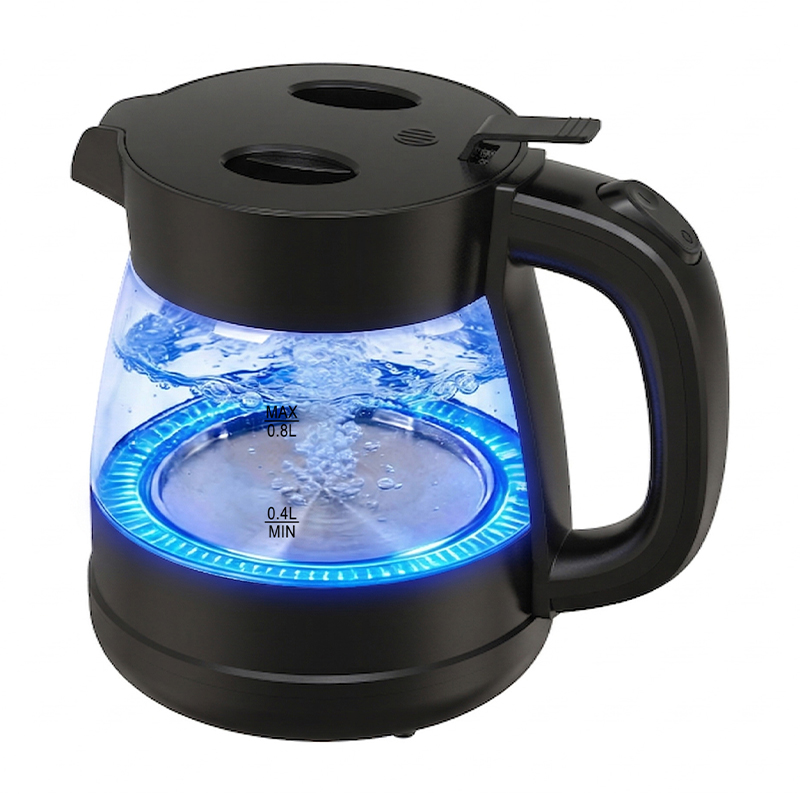
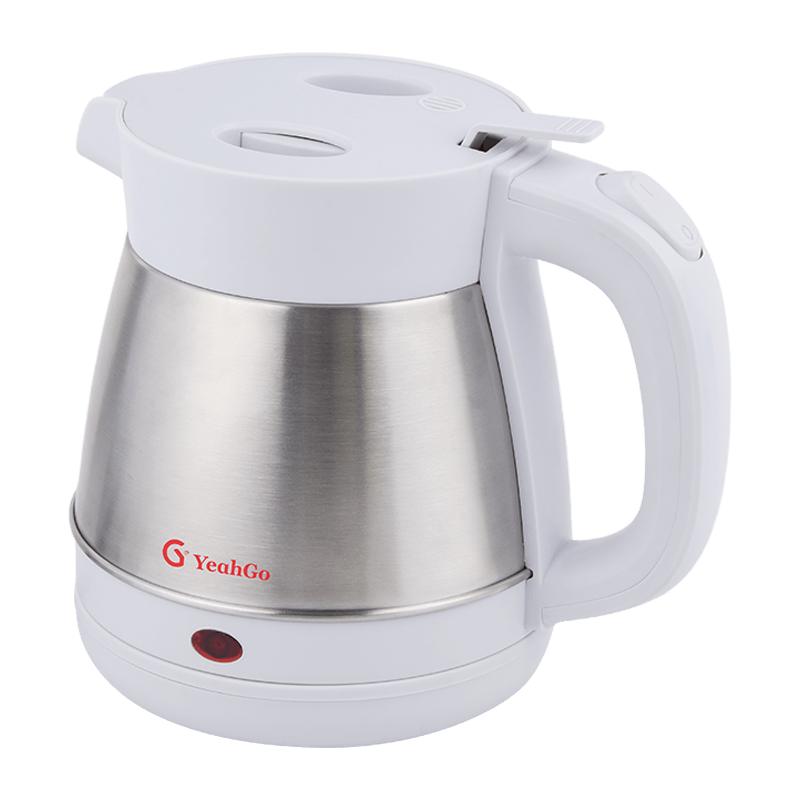
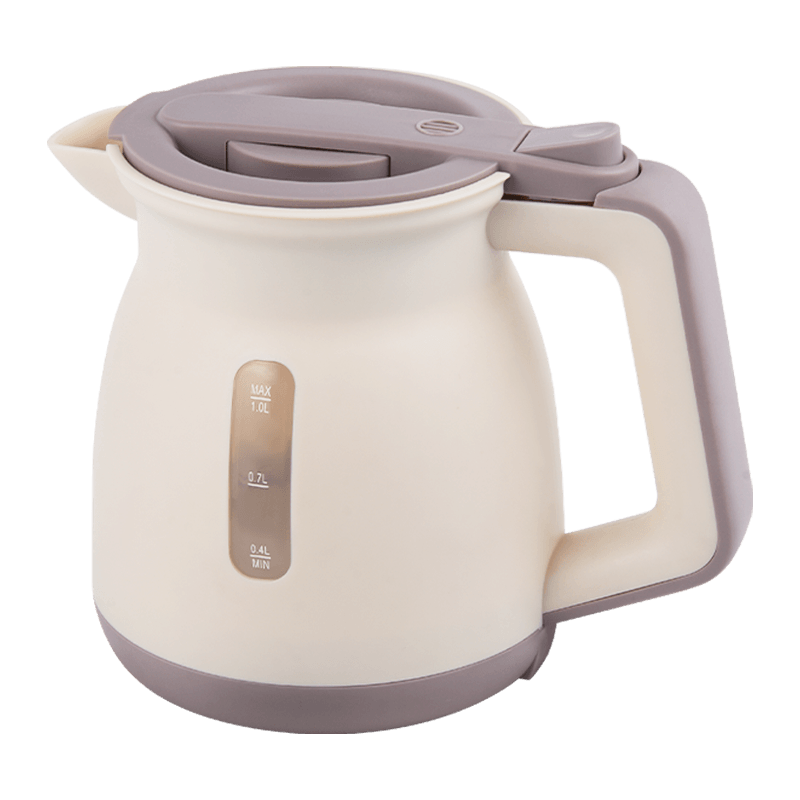 0.8L Anti-Tip Kettle with Intelligent Constant Temperature BaseCompact 0.8L kettle with anti-tip lid and smart constant-temperature base, offering multiple warming levels for keeping water near target across a morning.View Product →
Hold Time and Recovery Speed
Keep-warm is the feature people underestimate. A 1.7 L glass or stainless kettle loses heat through its walls, so a set point of 85°C can fall to 78°C within ten minutes without active reheating. Models with a 30 to 60 minute hold cycle switch the element back on in short bursts to stay near the target, which matters if you drink two or three cups across a morning rather than one.
Check two numbers: the hold duration and the reheat behaviour. A long hold with a slow, cycling element keeps temperature stable but uses more energy; a short hold with aggressive reheating is faster but can overshoot by several degrees. For office or hospitality use, a 60 minute hold with a clear display is usually the better trade.
Comparing the Main Control Types
The control interface tells you a lot about who the kettle is built for. Presets are quick but coarse; a dial or step adjustment gives finer control at the cost of a few extra seconds of attention.
| Control type | Typical range and step | Best suited to | Trade-off |
|---|---|---|---|
| Fixed presets, four to six buttons | 40°C to 100°C, fixed points | Households rotating tea, coffee and formula | No fine tuning between preset values |
| Dial or plus and minus adjustment | 40°C to 100°C in 1°C to 5°C steps | Pour-over coffee, delicate green tea | Slower to set, more parts to clean around |
| Preset plus keep-warm | Holds set point for 30 to 60 minutes | Home office, repeated cups, tasting sessions | Higher energy use, base stays warm |
| Boil only with live display | 100°C target, temperature shown | General boiling, large families | Display informs but does not control |
Materials and Safety Details Buyers Skip
Temperature control is only worth having if the rest of the build keeps up. Three body materials dominate: food-grade PP, high borosilicate glass and food-grade 304 stainless steel. PP is light, quiet and inexpensive, glass shows the water and resists staining but weighs more when full, and 304 stainless is durable but hides the fill level unless a window or display is fitted. Where stainless appears as an exposed band or trim, check that the internal contact surfaces are the same grade rather than a decorative sleeve.
Safety features should be treated as non-negotiable rather than premium. Look for automatic shut-off at boiling, dry-boil protection that cuts power when the element is uncovered, a lid that stays locked when tipped, and a base that resists sliding. Anti-tip geometry matters in homes with children or pets, because a kettle knocked over at 90°C is a burn risk regardless of how accurate the thermostat is. Kettle safety is covered by IEC 60335-2-15, and the certificates buyers usually request in Europe, North America and Japan include GS, CE, ETL, CB, RoHS and PSE.
A temperature display adds real value here: it lets the user see the actual reading instead of trusting a label, and it makes an off-spec controller obvious within the first week of use.
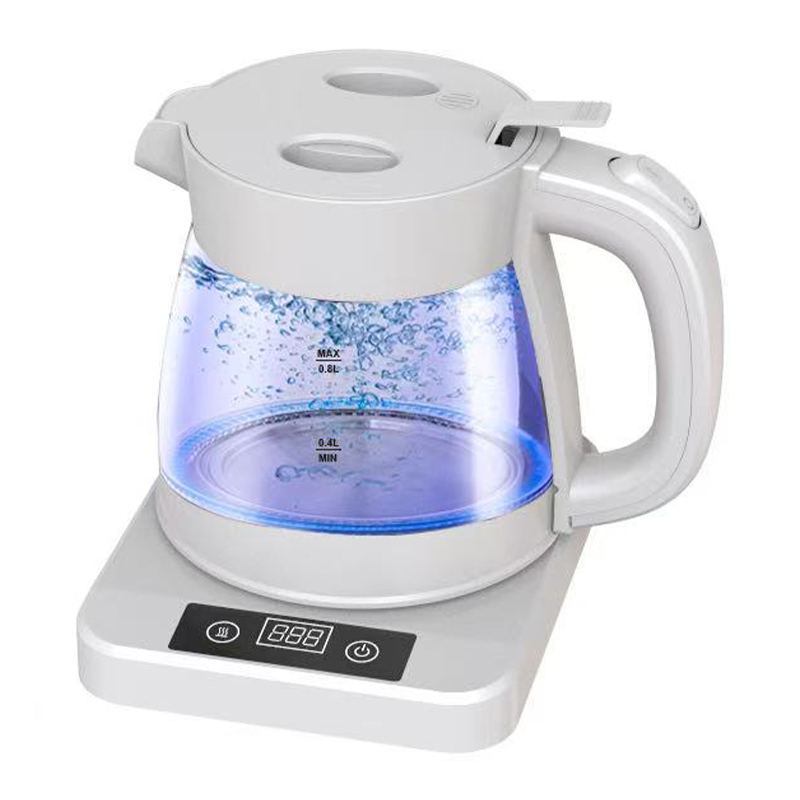 0.8L Glass Kettle with Temperature Display and Anti-Tip LidTransparent 0.8L glass kettle with digital temperature display and anti-tip lid, letting users see actual readings and warm water at multiple settings.View Product →
Capacity, Pouring and Daily Handling
Capacity drives most of the ergonomic complaints. A 1.0 L model suits two or three cups and stays light enough to pour one-handed; a 1.7 L model serves a family but weighs close to two kilograms when full, which changes how people lift it. Spout shape matters as much: a narrow spout gives control for pour-over and a wide one fills a teapot faster, and neither is better without knowing the user.
Also check the lid mechanism. Spring-loaded and one-touch pop-up lids are convenient but introduce a hinge that must survive steam; manual pull lids are simpler and last longer. Handle clearance, the angle of the grip and the position of the water window all affect how safe the kettle feels when it is full and hot.
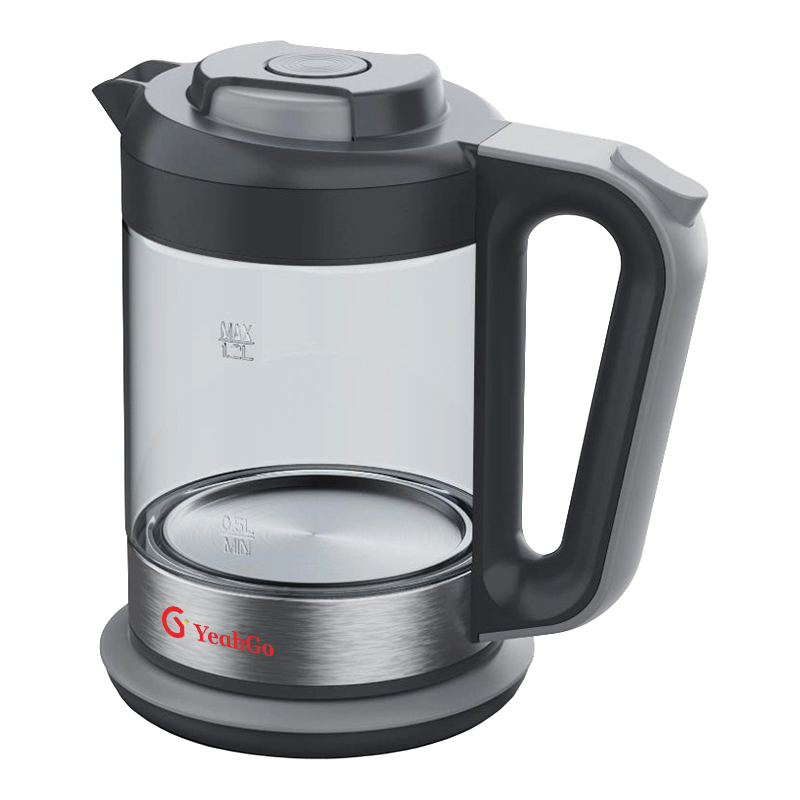
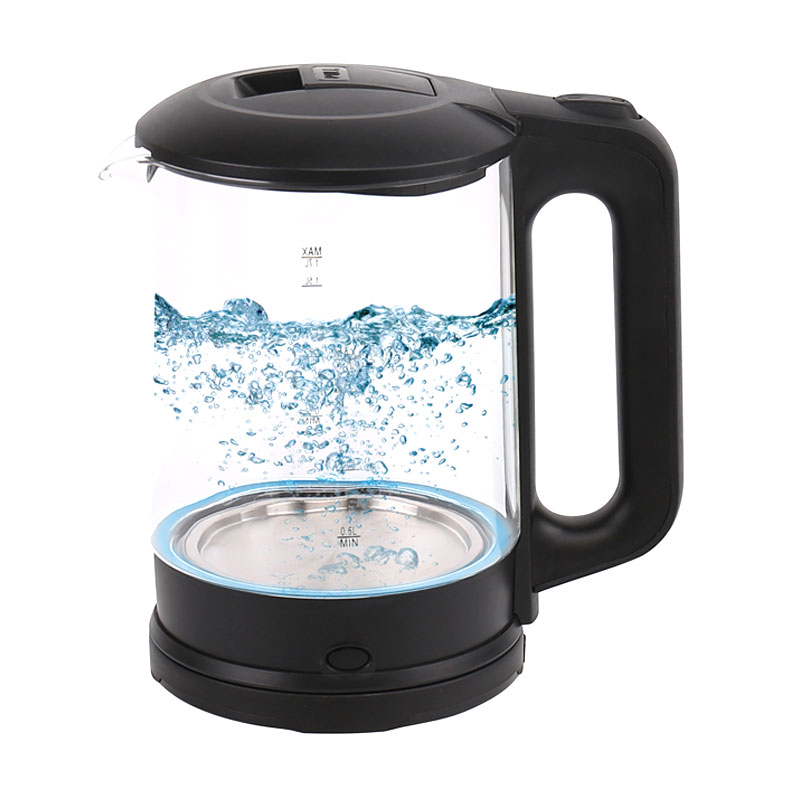 1.7L Manual Pull Lid Glass Kettle for Hotels and DormsDurable 1.7L glass kettle with simple manual pull lid and stainless steel base, suited for daily boiling in hotels, dorms, and shared spaces.View Product →
A Short Buying Checklist
- Confirm the measured accuracy at 70°C to 85°C, not only near boiling.
- Check hold duration and whether the element cycles or cuts out entirely.
- Match the control type to the user: presets for speed, dial for precision.
- Verify body material and that any stainless contact surface is food-grade 304.
- Require auto shut-off, dry-boil protection and anti-tip stability.
- Confirm certification for the destination market before ordering.
For a household, a 1.0 L to 1.7 L model with presets, a digital display and a 30 minute hold covers nearly every drink. For gifting, hospitality or private label programmes, accuracy at the low end and a stable base matter more than the preset count.
Frequently Asked Questions
Is a temperature control kettle worth it for coffee?
Yes, if you brew filter or pour-over. Water above 96°C scorches the grounds and pushes bitterness forward, while water below 90°C under-extracts and tastes sour. A kettle that holds 92°C to 94°C removes one variable from the process.
How accurate should the thermostat be?
Within plus or minus 2°C is a reasonable working standard for tea and coffee. Anything beyond 5°C of drift makes the preset labels largely decorative.
Glass or stainless steel for a variable temperature kettle?
Glass shows the water level and any scaling, which helps maintenance. Stainless steel is more impact resistant and better for high volume use. Both work well provided the controller is accurate and the lid seals properly.
For buyers sourcing at volume, the practical questions shift from features to consistency: can the factory hold the same thermostat tolerance across a 20,000 unit run, and can it supply the certificates each market requires. YeahGo, the export brand of Ningbo Yeyang Electric Co., Ltd., builds kettles in food-grade PP, high borosilicate glass and 304 stainless steel from a 6,000 square metre facility in Ningbo with more than 120 staff and annual capacity above 1.2 million units, shipping to Europe, North America, Japan and the Middle East from a site 35 km from the port. Certifications on file include GS, CE, ETL, CB, RoHS and PSE. The wider electric kettle range shows how anti-tip geometry, temperature display and intelligent constant temperature are combined across models, and the team can be reached through the contact page for specification or sample requests.
News
Products
Related Products
Integrated R&D, production and export full industrial chain.
Quick Link
Product
Contact Information
-
Tel:86-139 5829 1543
-
E-mail:ken@nbyeyang.net
-
Address: No. 299, Xinzhuang West District, Longquan Village, Henghe Town, Cixi City, Zhejiang Province, China
Copyright © Ningbo Yeyang Electric Appliance Co., Ltd. All Rights Reserved OEM/ODM Small Household Appliances Manufacturer Small Home Appliances Factory
